





In June and July 2026, billions of pairs of eyes will be fixed on North America. For betting operators, this isn’t just a tournament; it’s a multiple week long battle for Share of Wallet.
However, the true battlefield isn’t just the screen – it’s the fan’s emotional state. Traditional reach is no longer enough; success in 2026 requires ‘Emotional Salience.’ By synchronizing brand presence with the high-octane highs and lows of the match, operators can achieve a massive brand uplift, effectively anchoring their identity to the most memorable moments of the tournament. This emotional connection creates a frictionless path to performance: when a brand feels like part of the victory, it becomes the natural choice for the next bet.
While standard digital advertising relies on audience, contextual, and semantic targeting, sports moments marketing operates on a different principle: capturing fans when their emotions peak and their attention is laser-focused.
Most sports marketing approaches treat sporting events as static advertising opportunities. Brands buy pre-game spots, halftime sponsorships, or post-match placements, essentially treating a dynamic, emotionally-charged experience as a traditional media buy. This approach misses the fundamental truth about sports consumption: fan engagement fluctuates dramatically based on what’s happening in real-time. In fact 46% of sports streamers report being more attentive to ads during sports than in other genres, highlighting that realtime context not only spikes attention but also lifts receptivity to brand messages2. This is also shown in a recent fandom study, which states that 74% of sports fans link brands with a memorable sports moment. 2
Sports moments marketing flips the traditional marketing paradigm. Instead of advertising around sports, it’s advertising with sports, synchronizing brand messages to the emotional peaks and valleys that define the fan experience.
From a strategic point of view, fan engagement in the summer of 2026 follows a predictable emotional arc. Success depends on shifting from static tactics to a tiered approach that mirrors the fan’s emotional state:
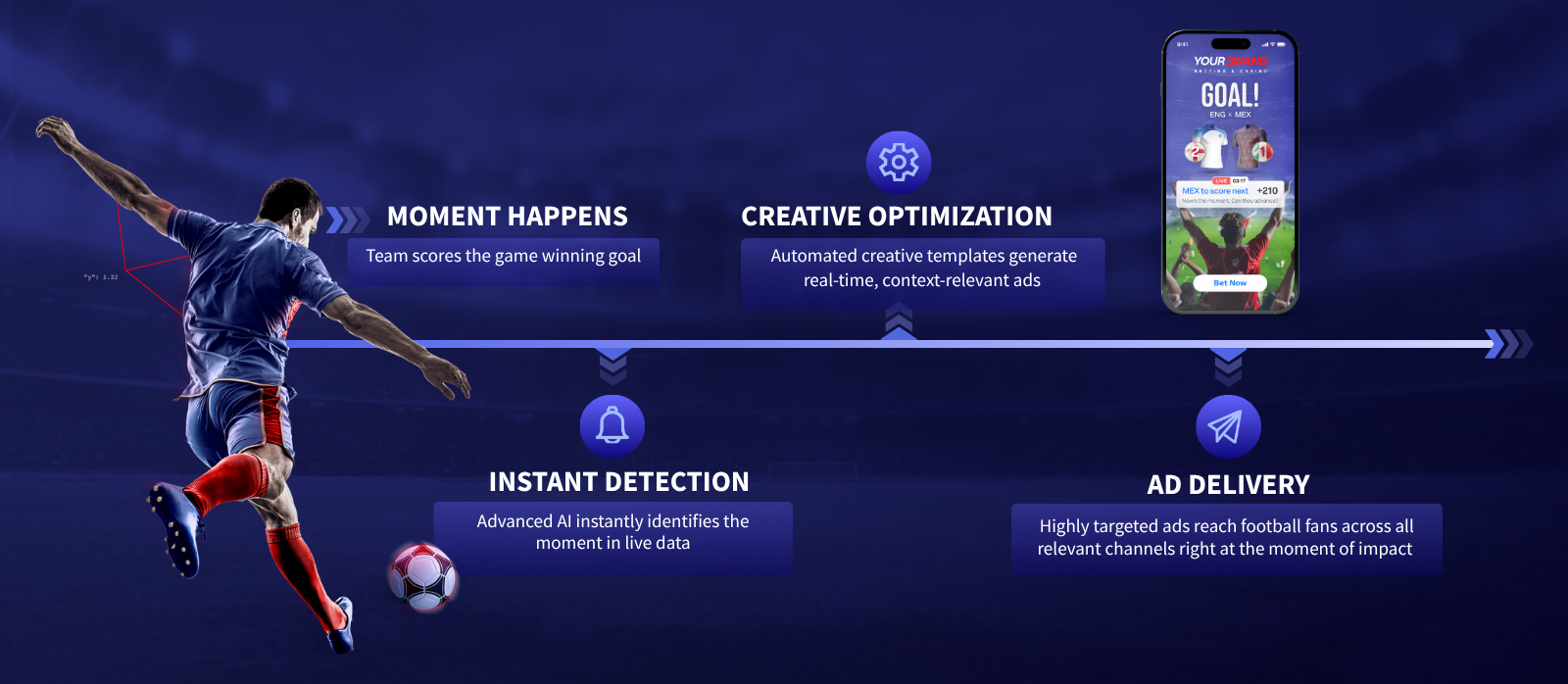
What separates Sports moments marketing from generic marketing automation is the sophisticated technology required to detect, process, and activate campaigns in real-time:
For betting and gaming brands, “Moments Marketing” isn’t just a buzzword – it’s a technical orchestration of live data, dynamic creative, and automated triggers. Here is how a betting operator dominates a match day, built around England’s possible (but still fictional) 2026 tournament route:
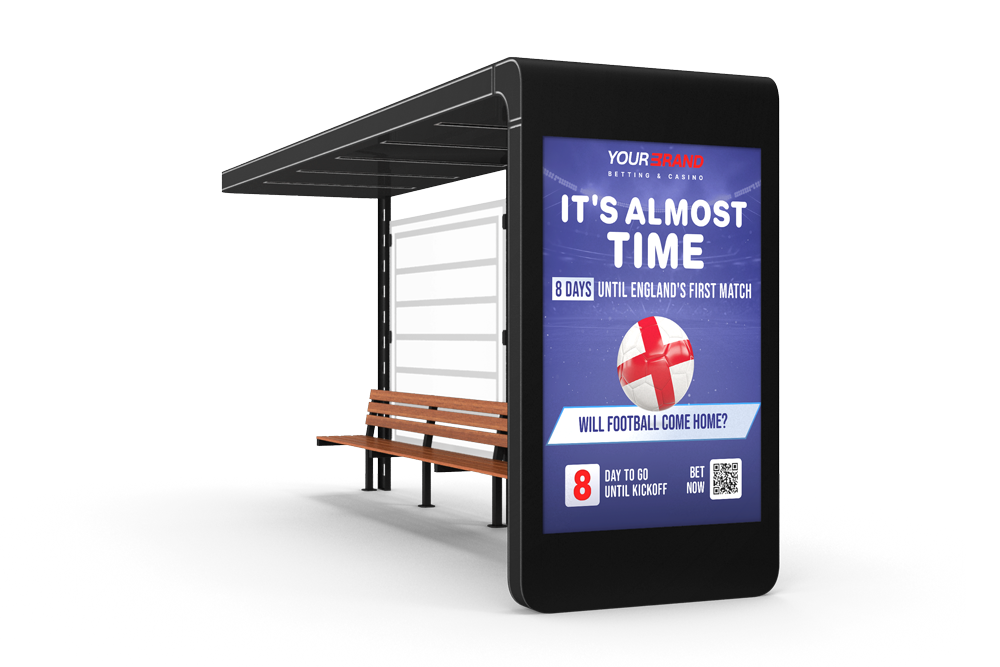
1. Dynamic DOOH (Pre-Match)
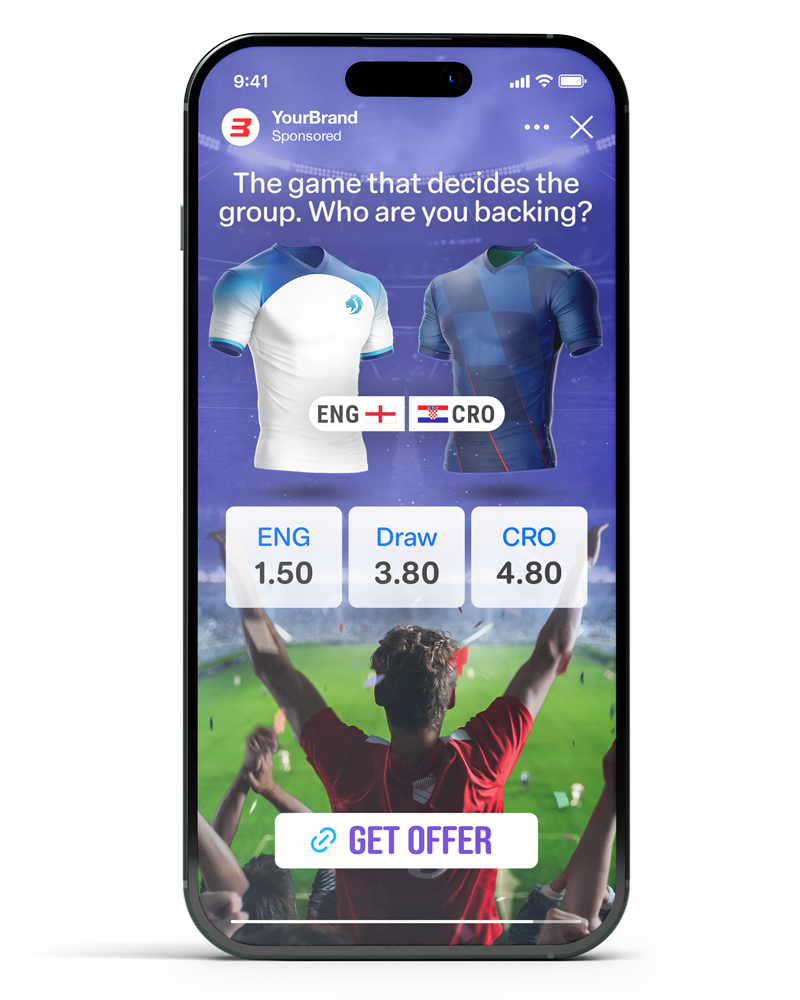
2. Social Urgency (Match-Morning)
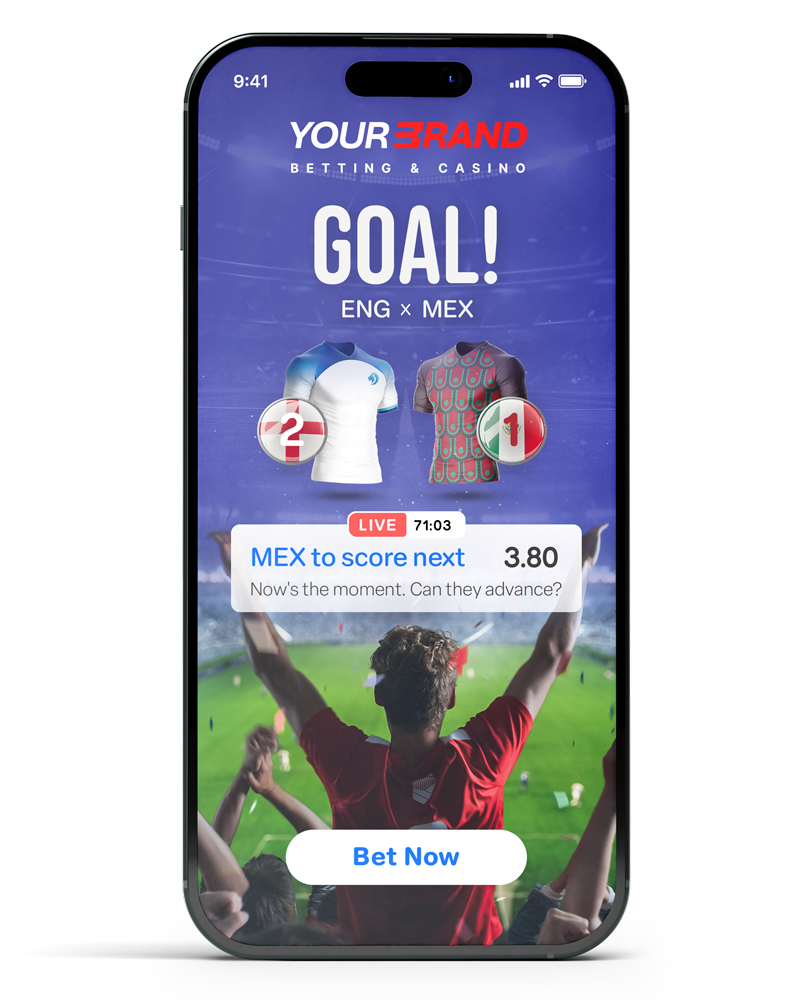
3. The Goal-Trigger (In-Play)
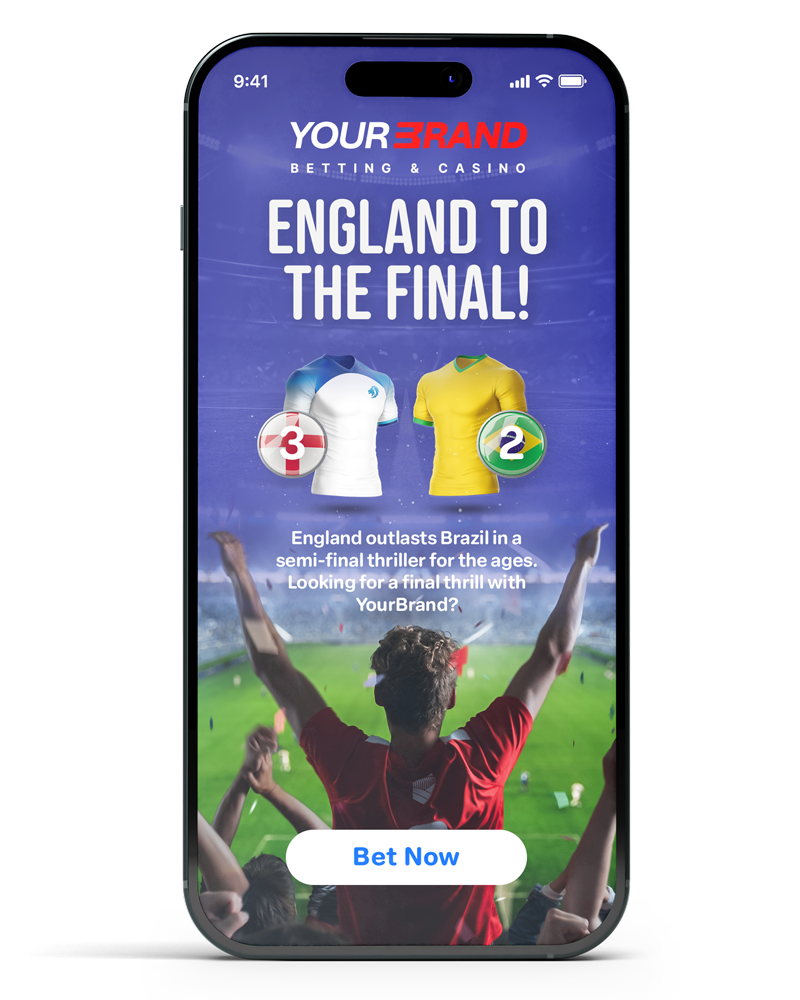
4. The Final Whistle: (Outcome)
Standard platforms, no matter how sophisticated, lack the sports-specific infrastructure required for moments marketing. They can’t detect a last-minute goal, understand tournament context, or differentiate between a group stage match and a knockout game. They lack access to official sports data, real-time odds integration, and the sports audience insights necessary for effective targeting.
Operating at the scale of this Football Summer – with over 100 fixtures and global time zones – requires a partner that integrates official data with high-speed execution. Without this specialized infrastructure, operators risk “Latency Decay,” where an ad for a player who has already been subbed off isn’t just ineffective – it’s a brand-damaging waste of budget.
The effectiveness of sports moments marketing isn’t theoretical. Various implementations of moment-triggered campaigns demonstrates measurable impact:
These results reflect the core principle: when advertising aligns with fan emotion and live context, it stops being interruption and becomes enhancement. Fans don’t just tolerate the message – they engage with it because it amplifies their existing emotional state.
Sports moments marketing represents more than an incremental improvement over traditional approaches – it’s a fundamental shift toward marketing that moves at the speed of sports. While competitors rely on scheduled placements and static creative, moments marketing creates hundreds of micro-opportunities within single events.
For the summer of 2026, this means the difference between over 100 traditional advertising opportunities (one per match) and 800+ moments-based opportunities (pre-match, goals, halftime, post-match, and contextual triggers). Each moment represents a chance to connect with fans when they’re most receptive, most emotional, and most likely to act.
The question isn’t whether sports moments marketing works – the data proves it does. The question is whether brands can afford to miss these moments while their competitors capture them.
Sports moments marketing requires specialized technology, official sports data partnerships, and deep understanding of fan behavior patterns – capabilities that extend far beyond traditional marketing automation platforms.