




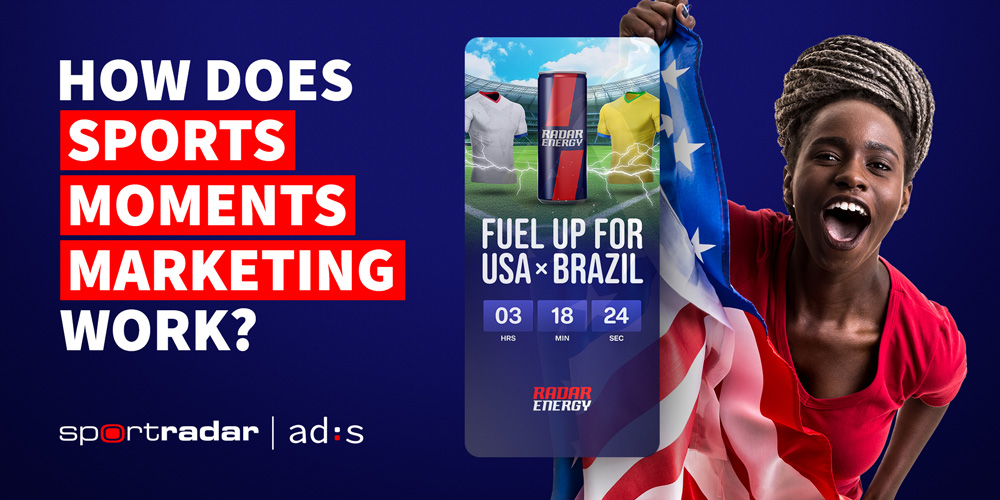
In June and July 2026, billions of eyes will turn to North America. For brands, that means more than just reach. It means a rare concentration of live attention, emotion and cultural relevance.
But the real opportunity is not just being present during the tournament. It is showing up in the moments that matter most.
Traditional reach is no longer enough. Success in 2026 will depend on relevance in the moment. When brands align with the highs, lows and turning points of live sport, they become part of the experience rather than just part of the media plan. And when that happens, attention, engagement and recall all get stronger.
While standard digital advertising relies on audience, contextual and semantic targeting, sports moments marketing works differently. It captures fans when their emotions peak and their attention is fully locked in.
Beyond Generic Sports Marketing: The Moments Shift
Most sports marketing still treats live events like static advertising opportunities. Brands buy pre-game placements, halftime sponsorships or post-match inventory, and treat a fast-moving, emotionally charged experience like a traditional media buy.
That misses the reality of how fans experience sport.
Attention rises and falls with the action. It spikes when something meaningful happens. A goal. A comeback. A red card. A record broken. A last-minute winner. In fact 46% of sports streamers report being more attentive to ads during sports than in other genres, highlighting that realtime context not only spikes attention but also lifts receptivity to brand messages. This is also shown in a recent fandom study, which states that 74% of sports fans link brands with a memorable sports moment.
Sports moments marketing flips the traditional model. Instead of advertising around sport, it is advertising with sport — aligning brand messages with the moments that define the fan experience.
The Three-Phase Fan Journey: Where Emotion Drives Action
From a strategic point of view, fan engagement during major tournaments follows a clear emotional arc. Brands that want to make the most of it need to move from static planning to an approach that reflects how fans actually feel in real time.
The Technology Behind Real-Time Activation
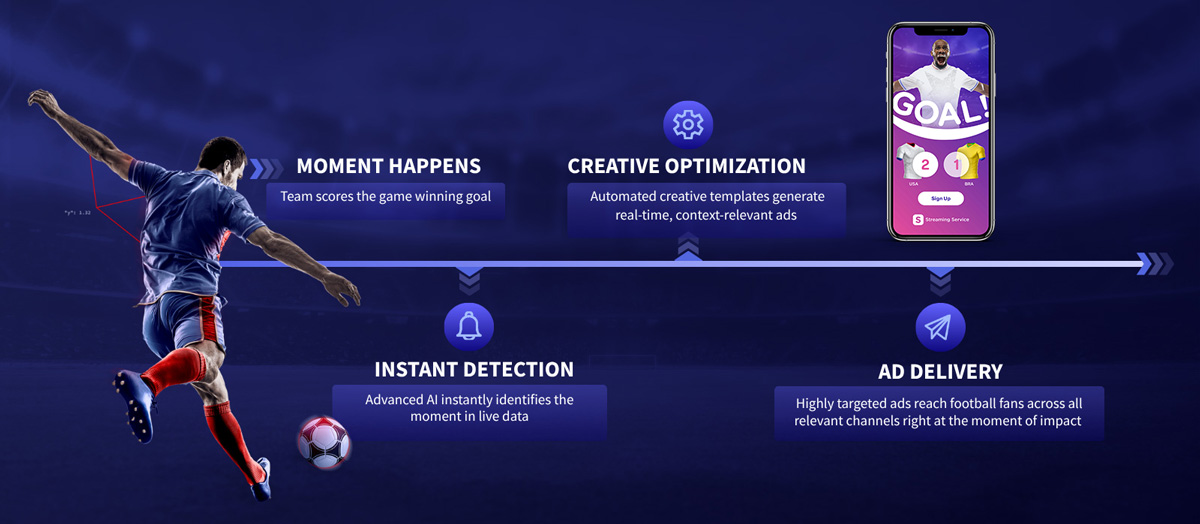
What separates sports moments marketing from standard marketing automation is the specialist technology needed to detect, process and activate campaigns in real time.
Football Moments in Action: Example Ad Sequences Across Channels
For brands, moments marketing is not just a creative idea. It is a technical orchestration of live data, dynamic creative and automated triggers. Here is what that can look like around a major international football match:

1. Dynamic DOOH (Pre-Match)
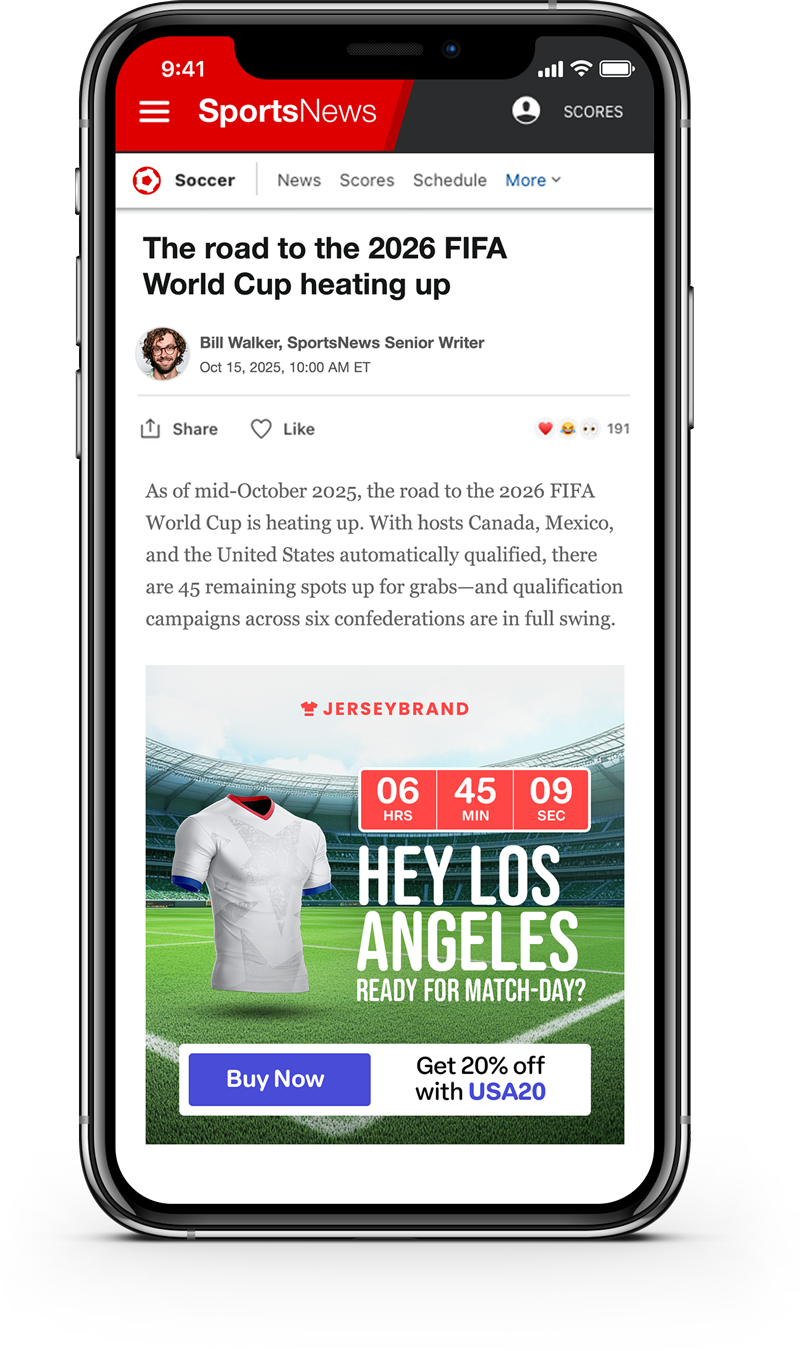
2. Social Urgency
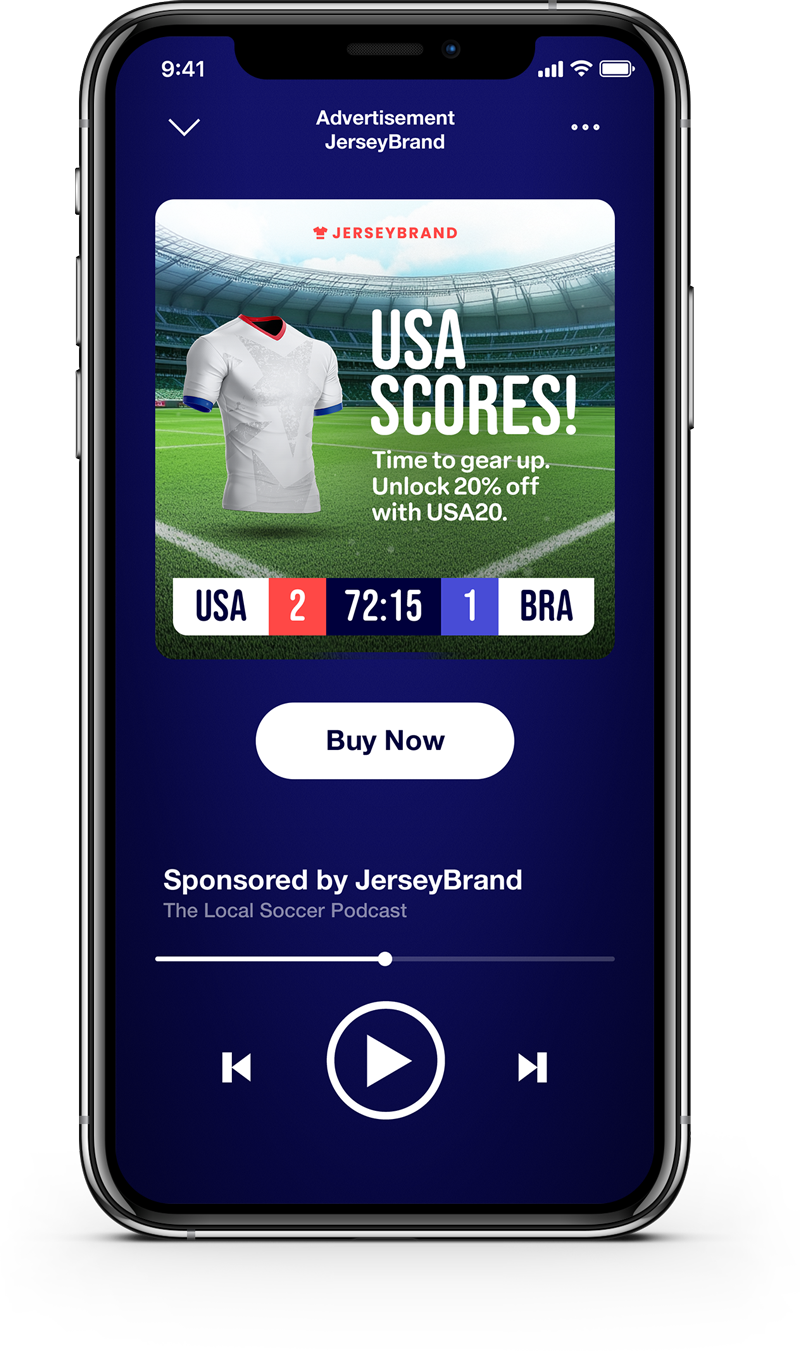
3. The Goal-Trigger (In-Play)
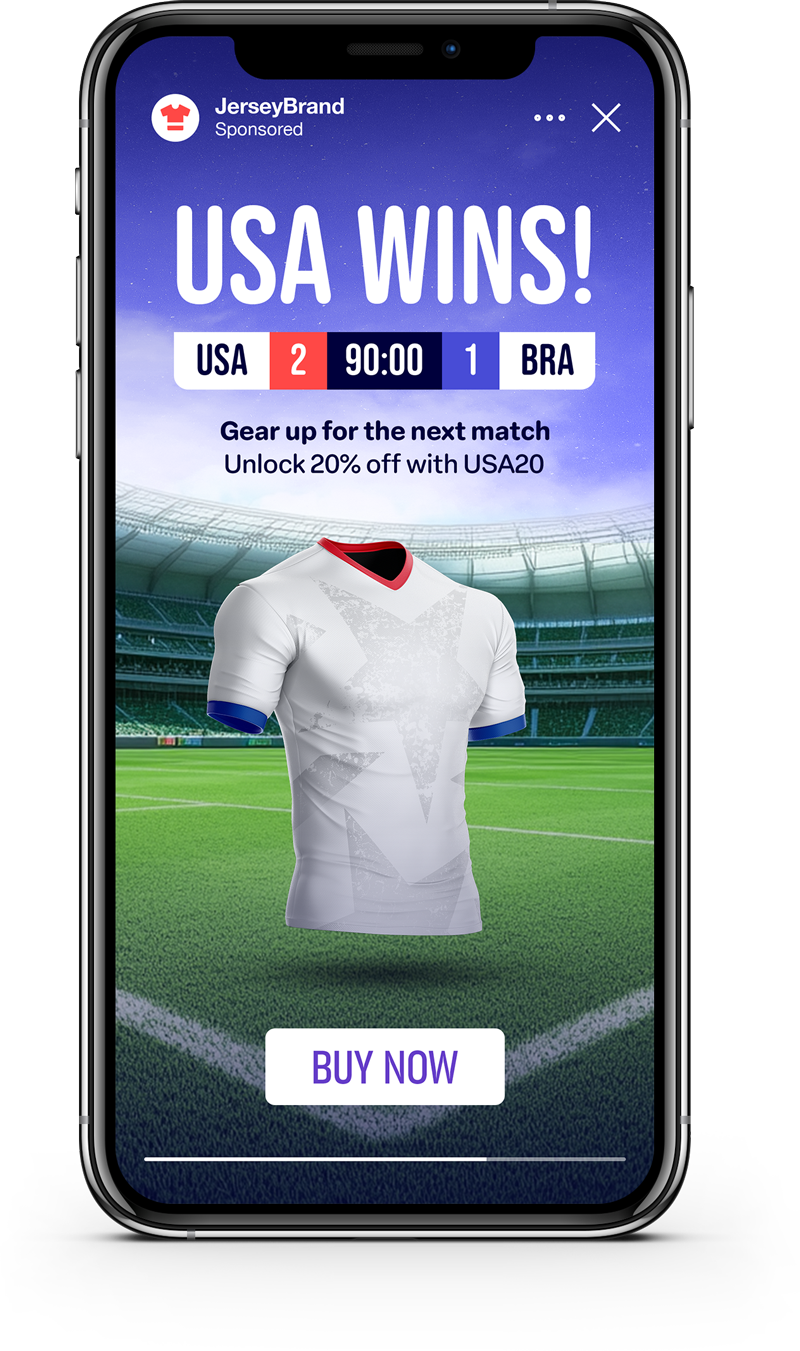
4. The Final Whistle: (Outcome)
Why Real-Time Sports Activation Needs Specialist Infrastructure
Standard marketing platforms can support automation. But live sport requires something more specific.
To activate effectively in the moment, brands need infrastructure that can:
Without that specialist setup, brands risk reacting too slowly or showing messaging that already feels out of date. In live sport, timing is not just a creative detail. It is a performance factor.
Proven Performance
The value of sports moments marketing is not theoretical. When campaigns align with live context and fan emotion, the results are measurable.
These results reflect a simple principle: when advertising aligns with what fans are already feeling, it becomes more relevant, more memorable and more effective.
The Advantage Of Marketing At The Speed Of Sport
Sports moments marketing is more than an optimisation of traditional campaign planning. It is a different way of thinking about activation.
Instead of relying only on scheduled placements and static creative, brands can create hundreds of opportunities within a single event: before kick-off, during major live moments, at halftime, at full-time and around wider contextual triggers.
For the football summer of 2026, that means moving from a small number of planned placements to a much richer set of live opportunities to engage fans when they are most attentive and emotionally invested.
The opportunity is clear. The question is whether brands are set up to act on it.
Sports moments marketing requires specialist technology, official sports data and the ability to activate at speed across channels. For brands that want to move with the game, those capabilities are becoming more and more important.